
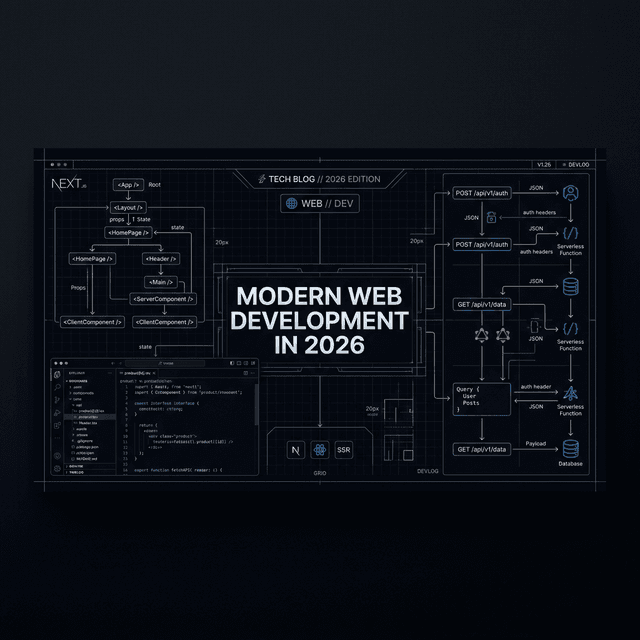
The landscape of web development is changing faster than ever. In 2026, we're seeing AI-driven code generation tools become deeply integrated into workflows, allowing developers to ship features significantly faster. Edge computing is moving workloads closer to users, reducing latency to near-zero for most interactions. WebAssembly continues to mature, allowing languages like Rust and C++ to run in the browser at near-native speeds, opening the door for complex desktop-class applications to run entirely in the browser.
Server components and partial hydration have become the norm, with frameworks like Next.js leading a shift away from client-heavy SPAs toward hybrid rendering strategies that prioritize performance. Developers who master these paradigms will find themselves highly sought-after in an industry that increasingly demands both speed and user experience.
The tooling ecosystem has also consolidating: build tools like Vite and Turbopack have largely replaced older bundlers, and the JavaScript runtime landscape has expanded beyond Node.js to include Deno and Bun, each offering compelling performance characteristics.
What remains constant is the need for strong fundamentals: clean HTML semantics, accessible design, and performant CSS. No matter how sophisticated the tooling gets, these core principles continue to separate good developers from great ones.