
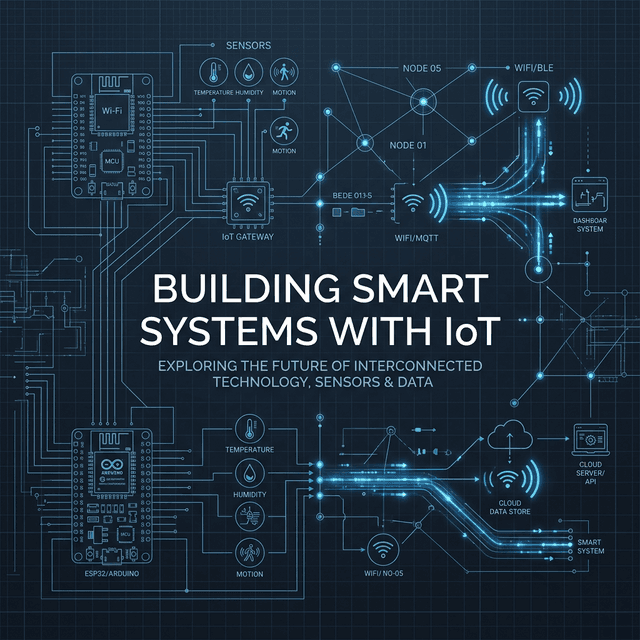
Internet of Things systems are deceptively complex. What looks simple on the surface — 'read a sensor, send data to the cloud' — involves a surprising number of design decisions that significantly impact reliability, cost, and scalability.
Start with the physical layer: choosing the right sensor for your measurement is critical. Not all temperature sensors are equal — some have high precision but slow response times, others are fast but drift over time. Understanding your application's tolerance for error and latency should drive your sensor selection.
Microcontroller selection follows from sensor requirements. The Arduino ecosystem is excellent for learning and prototyping, but production systems often demand the wireless connectivity of ESP32 or the processing power of a Raspberry Pi. Power constraints (battery vs. mains) also heavily influence this choice.
The networking stack is where most beginners underestimate complexity. MQTT is the dominant protocol for IoT messaging — it's lightweight, supports pub/sub architecture, and handles unreliable connections gracefully. Pair it with a broker like Mosquitto or a managed service like AWS IoT Core.
Finally, your data visualization layer turns raw numbers into actionable insights. Grafana remains my go-to for dashboarding, especially when paired with InfluxDB for time-series storage. The combination is powerful, open-source, and widely documented.