
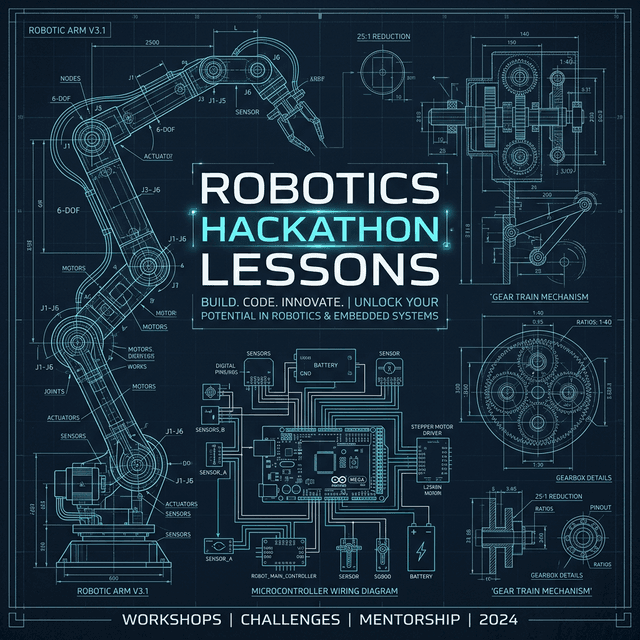
Competing in national-level robotics and IoT hackathons has been one of the most intense and rewarding learning experiences of my engineering education. In a span of 24-48 hours, you have to go from a blank slate to a working prototype — and then pitch it to judges like a startup founder.
The most important lesson I've learned is that perfect is the enemy of done. In a hackathon, a working 70% solution beats a theoretically perfect solution that never ships. You learn to make pragmatic trade-offs: which sensor to skip, which edge case to ignore for now, which feature to cut to make the demo credible.
Team dynamics matter enormously. The teams that win aren't necessarily the most technically skilled — they're the teams that communicate clearly, divide work intelligently, and support each other under pressure. Finding your role early (hardware lead, software lead, presenter) and trusting your teammates makes all the difference.
The Shark Tank-style pitch format at ETE Televerse was a revelation. Being forced to articulate your solution's value proposition in three minutes — to seasoned industry professionals — sharpened my ability to communicate technical ideas to non-technical audiences. That's a skill that will serve me for the rest of my career.